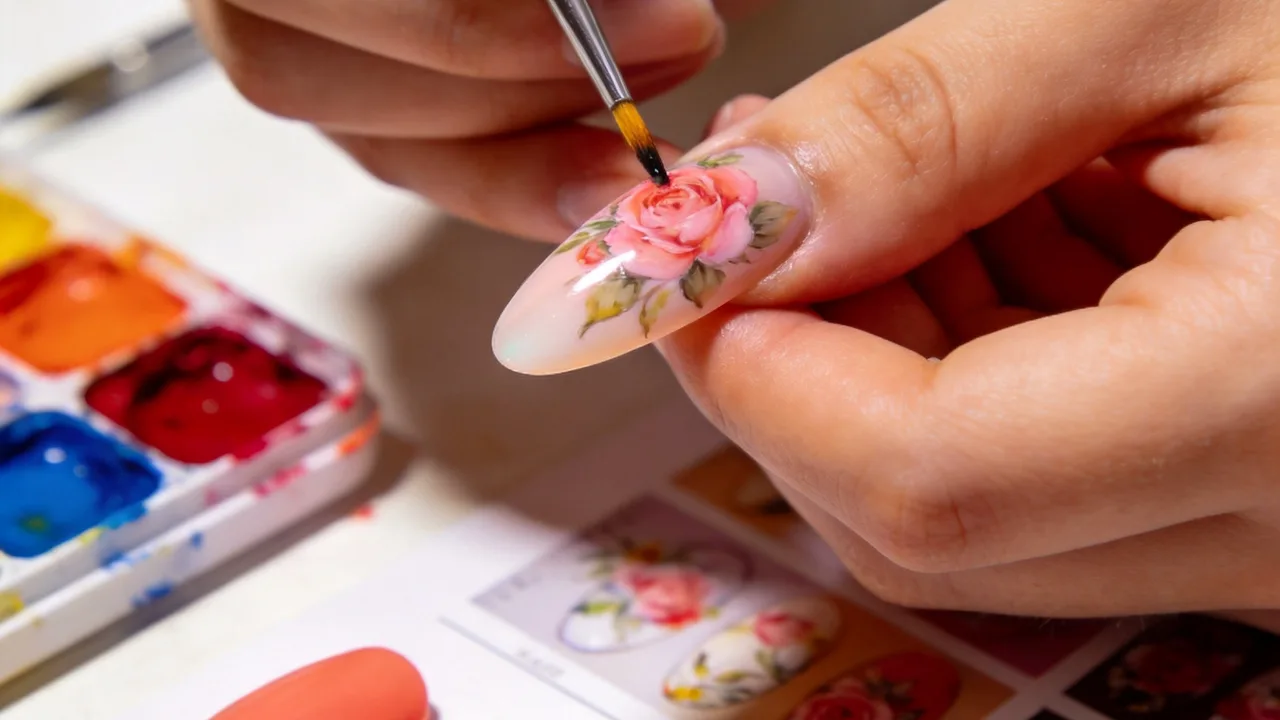
Customers sometimes ask why a new set takes months when a salon can paint something similar in an hour. The honest answer is that the salon is making one manicure for one pair of hands, and we're trying to make the same manicure perfect on fifty thousand pairs of hands — every size consistent, every bloom in the same place, the seventh set out of the box indistinguishable from the first. That kind of repeatability is where the real work lives. This is the path a design takes through our studio.
Step 1: the trend report
Twice a year, before any nail is painted, the design team builds a color-and-texture report. We look at runway beauty, Pantone direction, bridal search data, our own reorder patterns, and — most honestly — what our stylists are being asked for in custom consultations.
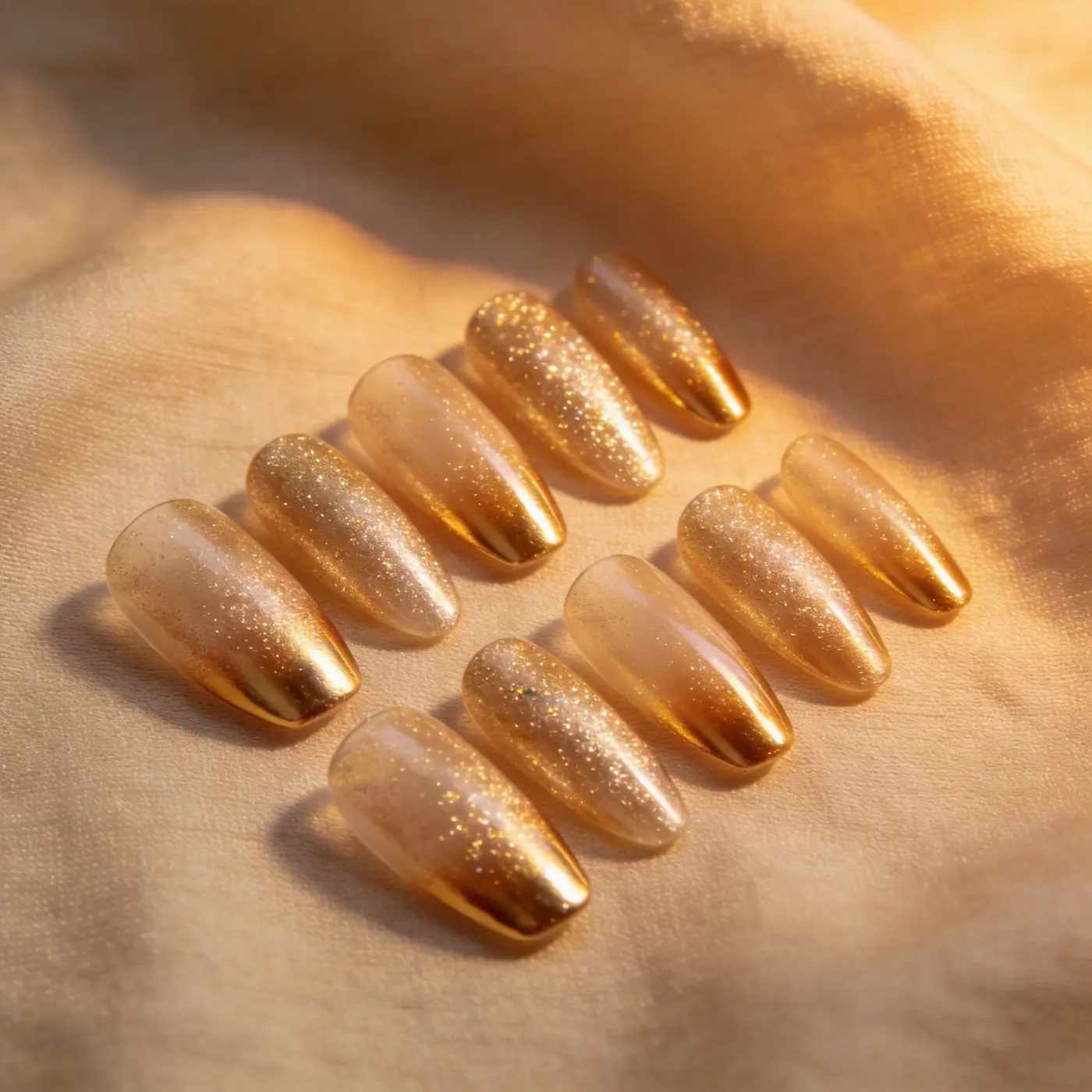
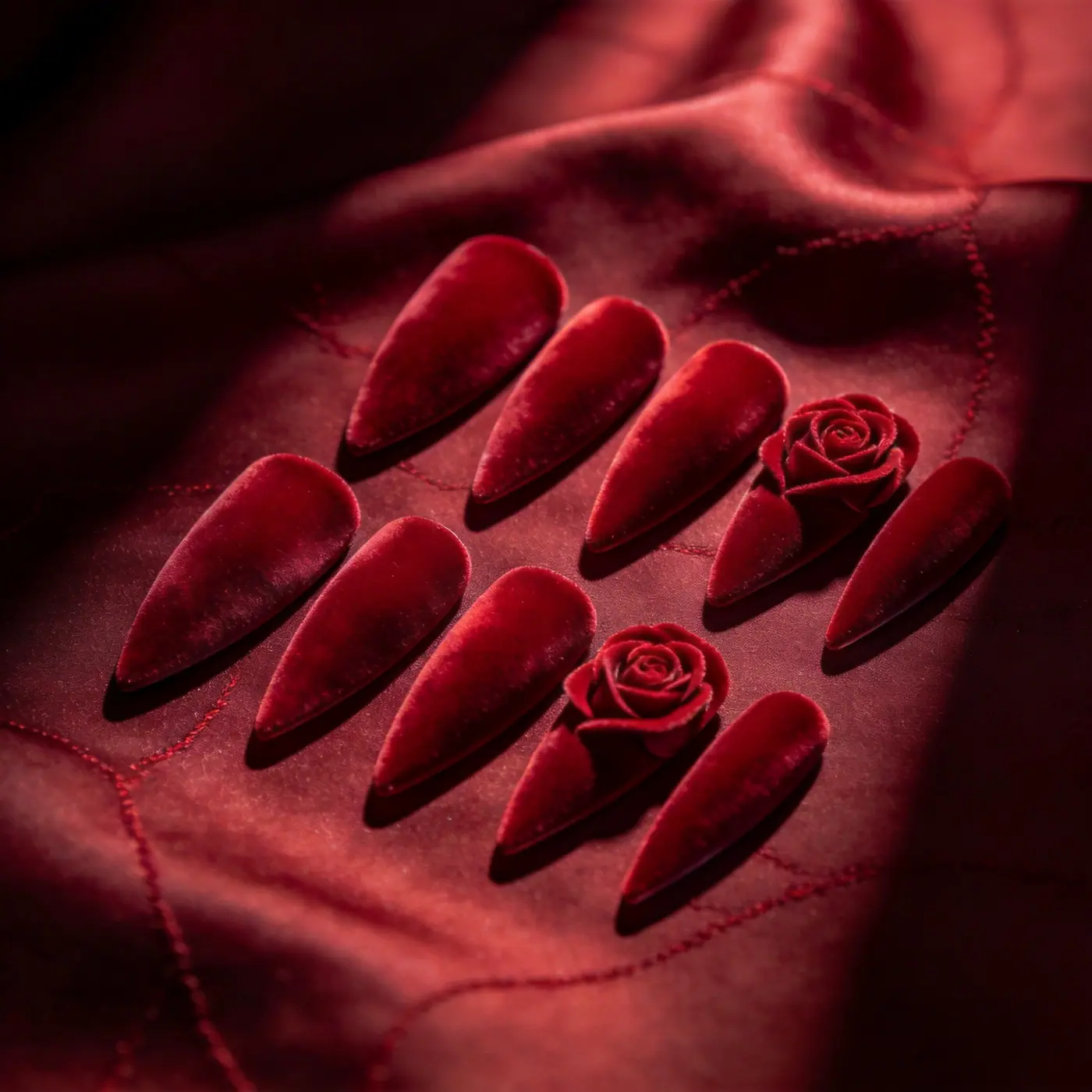
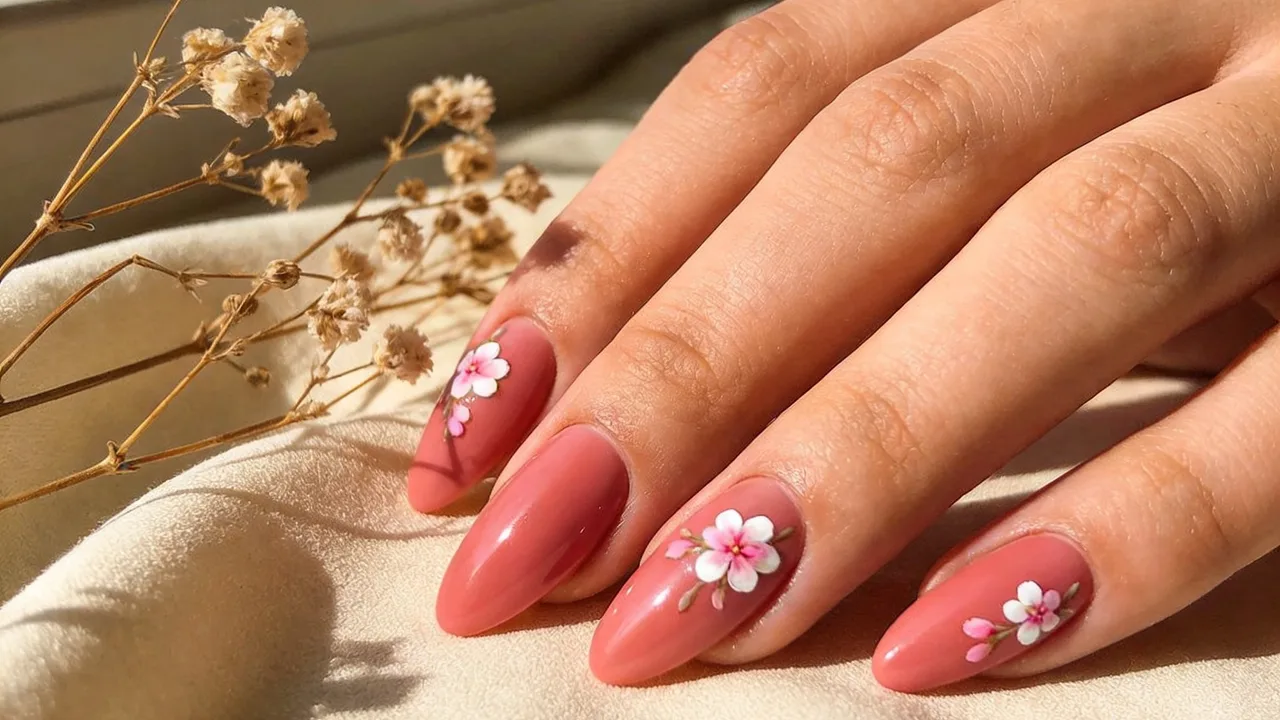
For the current season the signals converged: chrome was moving from silver-only into champagne and pearl, floral art was getting smaller and quieter, and deep wines were replacing classic reds. Every finished collection you see started as about 40 lines in a shared document.
Step 2: concept boards
Each designer takes a slice of the report and builds a physical board — paint chips, fabric swatches, jewelry references, sometimes a photograph of light on ceramic. We deliberately work offline here. Screens flatten the difference between champagne and rose gold, and that 4% difference is the whole product.
A concept needs to pass one question: would this look like us next to a candlelit dinner, a fluorescent office and a beach photo? Sets only survive if they work in all three.
Step 3: the prototype hand
This is where it becomes a nail. A designer hand-paints the concept onto a single set of tips, usually in medium almond first, because almond reveals proportion problems fastest. The prototype gets worn around the studio for a full week — washed, gloved, typed with — because a design that looks perfect flat always has opinions under real light.
About half of prototypes die here. The chrome edge that looked like jewelry looks like tin in daylight; the flower that looked delicate reads as a polka dot at arm's length. Better to find out on our hands.
Step 4: engineering the repeat
A hand-painted prototype is art; a manufactured set is engineering. The production team now solves how the design reproduces across 15 sizes without losing composition:
- Where does a bloom sit so it's centered on both an XS and an XL tip?
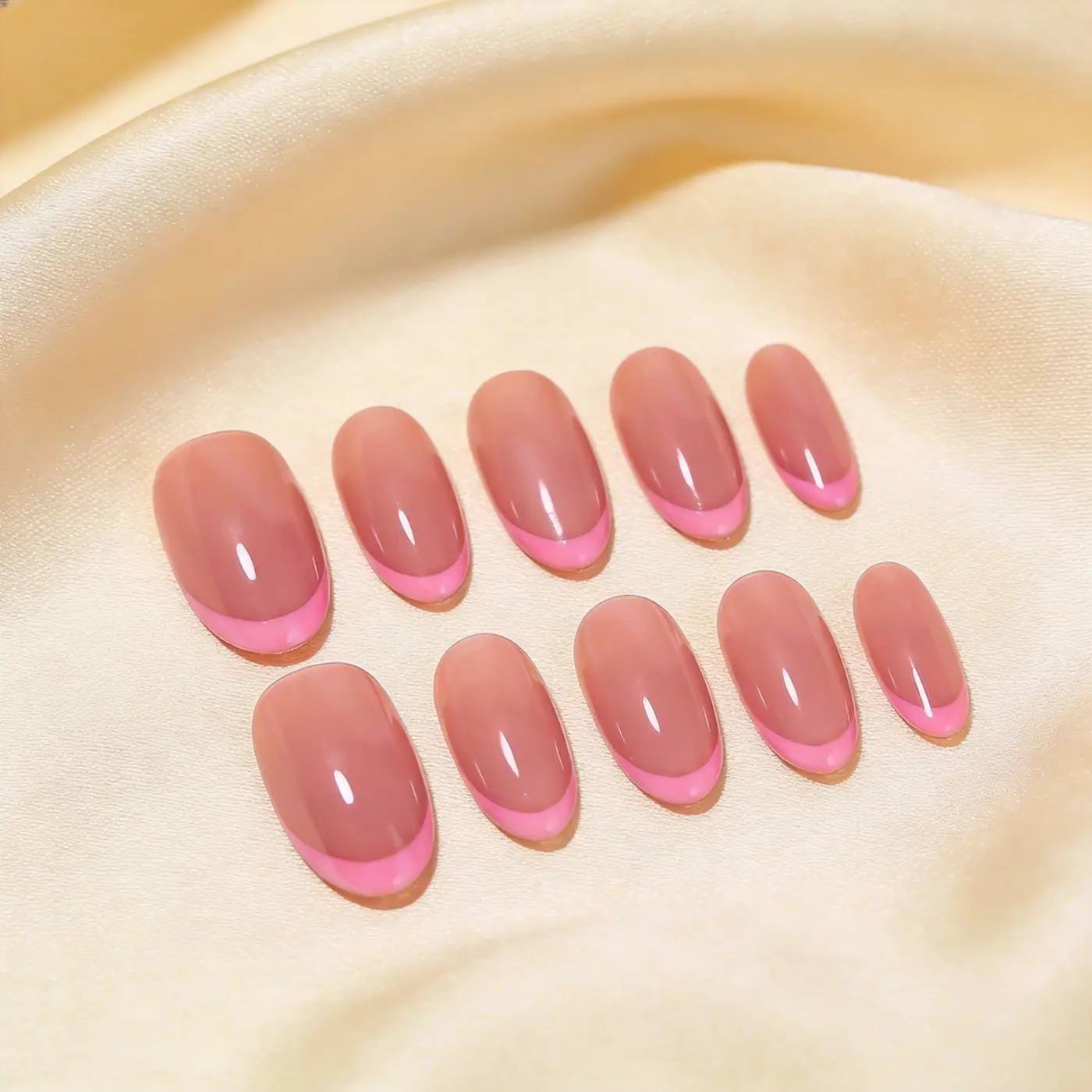
- Does a chrome French line stay visually the same width as the tip scales up?
- Can the layered finish survive packaging without micro-scratches?
This stage produces the masking guides, stencil geometry and layering order. It's the least glamorous step and the one competitors most often skip — which is why their size-9 nail never looks like the product photo.
Step 5: color approval
Every pigment is mixed against a physical master chip under three lights: daylight 6500K, warm domestic 2700K, and the camera flash we know everyone will use. A color has to hold in all three. Our Crimson Rose went through eleven mixing rounds before the wine stopped looking brown under office light.
The approved formula is then locked. A customer reordering in March gets the same pigment batch specification as the October launch.
Step 6: wear testing
Before a set is ever sold, it runs the gauntlet:
- Forty staff wearers across five skin tones and every nail shape
- Two-week wear with daily logging of chips, lifts and finish wear
- Reuse cycles — sets are removed, cleaned and reapplied twice
- Drop and flex tests on the tip material itself
Sets that survive get signed off. Sets that don't go back to step four, or out of the collection entirely. Roughly one in three concepts that reach this stage is abandoned.
Step 7: packaging and naming
Finally, a name — chosen late, deliberately, because naming a set before it exists pushes the design toward the word instead of the other way around. Champagne Glam was called "Project Warm Mirror" right up until the final approval. Photography is shot on real hands in real light rather than rendered, because the one question customers ask — "will this actually suit me?" — only a hand answers.
What this means for you
When a set finally arrives, it carries a lot of hidden work: trend judgment, a week on a designer's own hand, color across three kinds of light, and two weeks of forty people trying to break it. It's why we'd rather launch six finished sets a season than thirty rushed ones.
The best compliment we get isn't "these look expensive." It's "mine look exactly like the photo." That's the entire process, summarized in six words.